To get these “Best Hindi Story for Grade 1” worksheets please click on the given image.
Sparking Young Minds: The Magic of Storytelling, Reading, and Worksheets in Early Language Learning
As kindergarten educators and parents, we are the architects of a child’s first relationship with words. Teaching a language—especially one as phonetically rich and structural as Hindi—is about much more than getting children to memorize vowels (Swar) and consonants (Vyanjan). It is about building an immersive world where language feels alive, exciting, and accessible.
When we combine the oral magic of storytelling, the visual journey of reading, and the structured practice of printable worksheets, we create a powerful trifecta that accelerates language acquisition. Here is a breakdown of why this combination works so beautifully and how you can implement it at home or in the classroom.
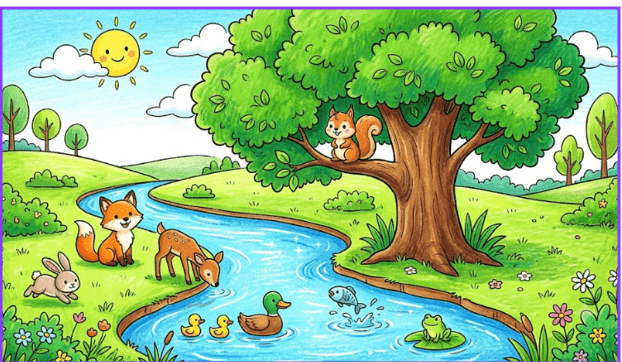
1. The Power of Storytelling: Building the Foundation
Before a child ever picks up a book or a pencil, they learn through their ears. Storytelling is the ultimate tool for early language learning because it introduces vocabulary in context.
Contextual Vocabulary: Instead of teaching standalone words like Kachhua (turtle) or Khargosh (rabbit), telling a classic fable anchors these words in a memorable narrative.
Auditory and Rhythm Training: Hindi is a highly phonetic language. When you narrate stories with expression, changes in pitch, and emphasis, children naturally pick up correct pronunciation, the flow of sentences (Vyakaran), and emotional expressions.
Engagement: A compelling story hooks a child’s attention far longer than a standard grammar drill. It stimulates imagination, allowing them to visualize the world you are describing.
2. Transitioning to Reading: Decoding the Symbols
Once children are familiar with the sounds of a language, reading bridges the gap between spoken words and written symbols.
How to Teach Early Reading Effectively:
The Phonic Approach: Start with the foundational sounds. Introduce a few letters at a time and practice their distinct sounds before rushing into complex word formation.
The “Shared Reading” Method: Sit with the child and trace your finger under the words as you read aloud. This helps them connect the spoken sound directly to the visual letter script.
Use Rich Visuals: Kindergarteners are highly visual learners. Books with vibrant illustrations provide immediate context clues, helping them guess the meaning of unfamiliar words without getting frustrated.
3. Bridging the Gap with Printable Worksheets
While stories and reading provide excellent input, young learners need a way to process and practice that information actively. This is where high-quality, targeted printable worksheets become indispensable assets for both teachers and parents.
                  ┌──────────────────────┐
                  │ 1. STORYTELLING      │  <-- Introduces sounds & vocabulary
                  └──────────┬───────────┘
                             ▼
                  ┌──────────────────────┐
                  │ 2. READING ALOUD     │  <-- Connects sounds to letters
                  └──────────┬───────────┘
                             ▼
                  ┌──────────────────────┐
                  │ 3. PRINTABLE SHEET   │  <-- Solidifies through tactile practice
                  └──────────────────────┘
How Worksheets Empower Teachers:
Structured Reinforcement: After reading a story or introducing a new set of letters, a worksheet offers immediate, focused practice (like matching pictures to their starting letter or tracing practice).
Easy Differentiation: Teachers can quickly print different worksheets based on individual student needs—some might work on simple letter recognition, while others practice small two-letter words (bina matra wale shabd).
Progress Tracking: Worksheets provide a physical, tangible record of a child’s learning curve over the school year.
How Worksheets Empower Parents:
Extension of Classroom Learning: Parents often want to help their child at home but don’t know where to start. A printable worksheet gives them a clear, bite-sized activity that aligns perfectly with what’s happening in school.
Fine Motor Skill Development: Beyond language, the physical act of holding a pencil or crayon, tracing lines, coloring within boundaries, and completing matching exercises builds crucial fine motor skills and hand-eye coordination.
Screen-Free Engagement: Printables provide a fantastic, high-engagement alternative to digital screens, giving children a tactile, focused learning experience.
The Takeaway: Language learning is a journey that moves from listening to speaking, then to reading, and finally to writing. By wrapping our lessons in beautiful stories, exploring them through books, and reinforcing them with intentional printable worksheets, we give our young learners the strongest possible start on their literacy journey.
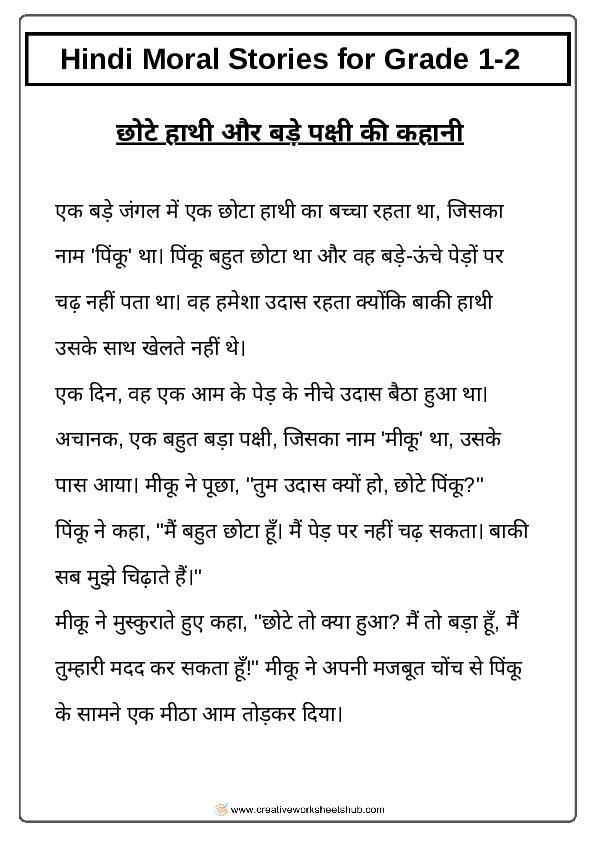
Hindi moral stories play a significant role in early childhood development for several reasons:
1. Cultural Connection: These stories introduce children to their cultural heritage and values, fostering a sense of identity and belonging. They help children understand the traditions, beliefs, and practices that are integral to their community.
2. Moral Education: Hindi moral stories often convey important life lessons about honesty, kindness, perseverance, respect, and other virtues. This helps instill ethical values at an early age, shaping children’s character as they grow.
3. Language Development: Listening to and engaging with Hindi stories enhances language skills by introducing new vocabulary in context. It aids in phonetic recognition and comprehension while improving both verbal communication skills and literacy.
4. Critical Thinking Skills: Moral dilemmas presented in these stories encourage children to think critically about right and wrong decisions. Discussing the choices made by characters can promote analytical thinking as well as empathy towards others.
5. Imagination Stimulation: Stories ignite creativity by allowing young minds to visualize characters, settings, and events within narratives. This imaginative engagement is crucial for cognitive development during formative years.
6. Listening Skills: Hearing stories improves auditory processing abilities; it teaches children how to focus on spoken words while developing concentration spans—skills essential for later academic success.
7. Social Interaction: Sharing these tales with peers or family members fosters bonding moments that enhance social skills such as communication, sharing thoughts/feelings about the story’s message or discussing different perspectives based on experiences related to its themes.
8. Entertainment Value: Besides being educational tools, Hindi moral stories capture children’s attention through entertaining plots filled with adventure or humor which makes learning enjoyable! Incorporating Hindi moral stories into daily routines can have long-lasting positive effects on children’s emotional intelligence alongside cognitive growth!
Read more Hindi Stories here: